The Process of Terraforming
So, hopefully you've already read about the solar shade and the Skyhook. Now that we have everything we need to make a successful terraformation of Venus, we just need to run the procedure! But how will we do that?
Ooh, Hot!
The surface is too hot and the atmosphere is so dense. Time for the solar shades!
As we already know from reading about solar shades, the mirrors will blot out the sun and prevent the rays from hitting the planet. This will not only cool the planet down, but it will also cause the CO2 to rain down as it gets colder and colder. Of course, it will take many years, but eventually the temperature will be so cold, the CO2 will rain down, then freeze. The thick CO2 should be completely frozen after 200 years, and now the atmosphere should be completely void of thick carbon dioxide, and the pressure on Venus will go from 90 times as much as Earth's to only 5 (Kurzgesagt, 2021). This means we can fill the atmosphere with oxygen, plant some trees, grow some muscle, and we're done, right? Not quite. To live on Venus, it will have to be warmed up so that humans won't need constant heating to survive comfortably. If we do that with the toxic ice on the surface, it will just melt and release everything back into the atmosphere, undoing all of the hard work. So instead, we'll have to dispose of it somewhere out in orbit so we can use it later (it will be important!). This is where... the Skyhook comes in!
A Dance of Ice and... Ice?
As the Skyhook gains momentum when it receives a payload and uses momentum when it throws a payload (Kurzgesagt, 2019), we can use this to our advantage. Since we need to dispose of the toxic ice on the surface of Venus, but also require water to sustain life, we'll be able to use Skyhooks to accelerate CO2 ice into orbit and transport ice from the ice moon, Europa, for water (Kurzgesagt, 2021). Eventually, a compact CO2 moon will be orbitting Venus, and enough water from Europa will have reached Venus to start the next stage.

Everything Else. All At Once
This is where the fun begins. As we gradually reheat the surface of Venus with mirrors reflecting in light harnessed by the solar shade, we'll have full control over where we want to heat. The first inhabitants of Venus will be cyanobacteria, which will convert sunlight to oxygen through photosynthesis, and gradually, more greenery will be added, and carbon dioxide from the CO2 moon will be taken to feed the plants and increase the speed of the process (Kurzgesagt, 2021). Before long, Venus will be covered in lush jungles and large oceans of pure water. The atmosphere will be breathable and the temperature will be comfortable.
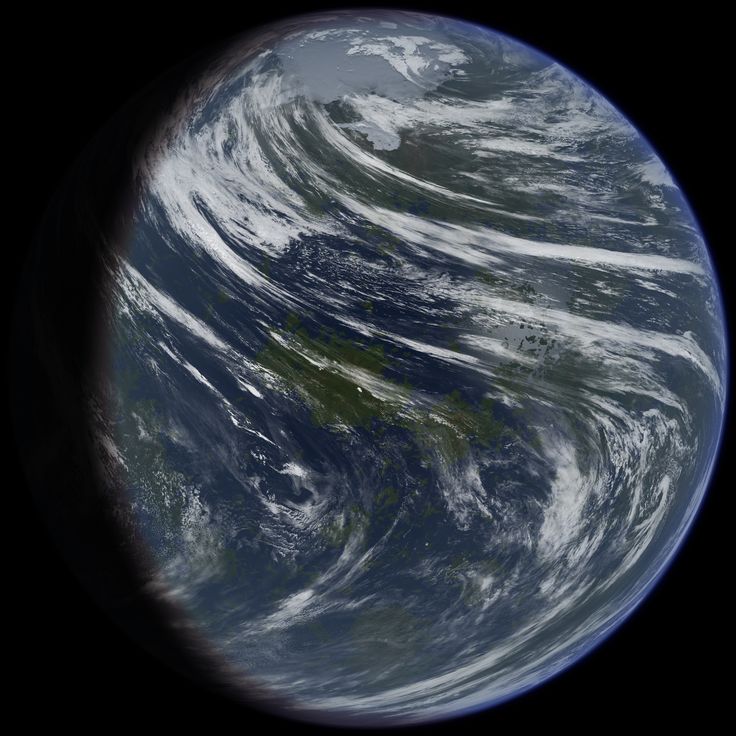
Of course, all of this is theoretical, and we are still a long way from traversing out and colonising the solar system. But even so, the only thing keeping us from progressing is our imagination.
Further Reading (For The Nerds)
Download the full report here, references included.